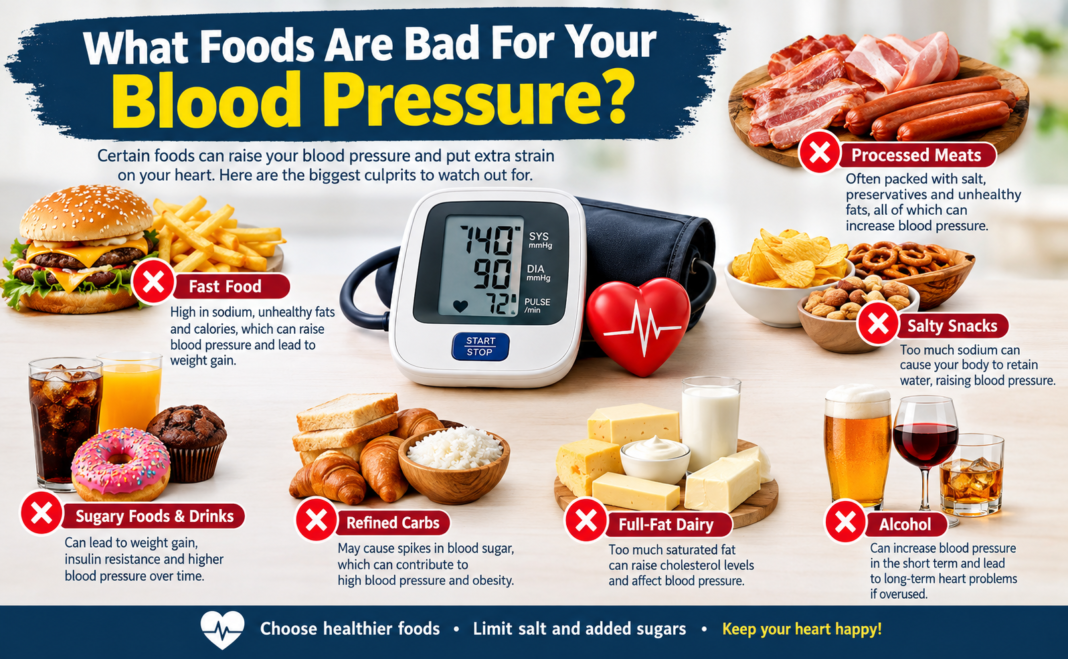


High blood pressure, or hypertension, is often called the “silent killer” because it typically produces no obvious symptoms while quietly damaging the heart, kidneys, blood vessels, and brain. According to the World Health Organization, more than one billion adults worldwide live with hypertension, and it remains a leading risk factor for heart attacks, strokes, and kidney failure.
While genetics, age, and stress all play a role, diet is one of the most powerful levers you can pull. The foods you eat every day can either relax your arteries or stiffen them, help your body shed excess sodium or trap it, and support or sabotage the delicate system that regulates blood volume and vessel tone. The good news is that diet is modifiable. The challenging news is that many of the worst offenders for blood pressure are hidden in plain sight—in foods marketed as healthy, convenient, or “just a treat.”
This article explores the main dietary culprits behind elevated blood pressure, explains why they cause harm, and offers practical swaps so you can protect your cardiovascular health without giving up flavor.
How Diet Influences Blood Pressure
Blood pressure is the force of blood pushing against artery walls. It is governed by several factors: the volume of blood in your vessels, how wide or narrow those vessels are, and hormonal signals such as the renin-angiotensin-aldosterone system. Diet touches all of these.
Sodium is the most studied dietary factor. Excess sodium causes the body to retain water, increasing blood volume and thus pressure. Potassium, on the other hand, helps the kidneys excrete sodium and relaxes blood vessel walls. When your diet is high in sodium and low in potassium—a pattern typical of processed-food-heavy eating—the balance tips toward hypertension.
Other dietary components matter too. Saturated and trans fats promote inflammation and arterial stiffness. Added sugars and refined carbohydrates drive insulin resistance, which raises blood pressure through multiple pathways. Alcohol and caffeine produce short-term spikes and, with chronic use, longer-lasting elevation. Understanding these mechanisms makes it easier to identify which foods deserve the most caution.
The Worst Offenders: Salt-Loaded Processed Foods
Processed and packaged foods are the single largest source of sodium in most modern diets—far more than the salt shaker. Deli meats, bacon, sausage, hot dogs, and canned soups can contain a full day’s worth of sodium in a single serving.
Why is this so damaging? Sodium pulls water into the bloodstream, expanding blood volume. Over time, high sodium intake also damages the lining of blood vessels and makes them less able to dilate. The American Heart Association recommends no more than 2,300 mg of sodium per day, with an ideal limit of 1,500 mg for most adults—especially those with hypertension. Yet a single cup of canned chicken noodle soup can deliver 800–1,200 mg, and a hot dog with a bun and condiments can exceed 1,000 mg.
Frozen dinners, pizza, instant noodles, and boxed rice or pasta mixes are similarly loaded. These convenience foods are engineered for flavor, texture, and shelf life, and salt is the cheapest tool to achieve all three.
Restaurant and Fast Food
Even if your home cooking is pristine, restaurant meals can undo your progress. Fast food and chain restaurant dishes are notoriously high in sodium, often because of added salt, soy sauce, cheese, cured meats, and sauces.
Consider a typical fast-food burger meal: the patty, bun, cheese, pickles, and fries together can exceed 1,500–2,000 mg of sodium. Chinese takeout dishes drenched in soy sauce or teriyaki can be even worse. A single slice of delivery pizza may contain 600–800 mg. Add a soda and dessert, and you have a blood-pressure bomb on a tray.
Restaurant portions are also larger than most people realize, which multiplies the sodium, saturated fat, and sugar content. When you eat out, the safest strategy is to ask for sauces on the side, choose grilled over fried, and look for menu items labeled as low-sodium or heart-healthy.
Canned and Pickled Foods
Canning and pickling rely on salt as a preservative. Canned vegetables, beans, tuna, and soups are common pantry staples, but they often carry a heavy sodium load.
A half-cup of canned green beans can contain 300–400 mg of sodium, while a cup of canned chili or baked beans may reach 1,000 mg. Pickles, olives, sauerkraut, and kimchi are especially concentrated sources because the brine itself is salty.
There is a simple fix: rinse canned beans and vegetables under cold water for about a minute. This can remove 40 percent or more of the surface sodium. Better yet, choose “no salt added” or “low sodium” versions, which are increasingly available.
Bread, Cheese, and Everyday Staples
Some of the biggest sodium contributors are foods people never suspect. Bread is a top source of sodium in many diets, not because a slice is salty, but because people eat it multiple times a day. A single slice may contain 150–200 mg; a sandwich with two slices plus cheese and deli meat can hit 1,200 mg or more.
Cheese is another hidden source. While naturally occurring sodium in milk is modest, the cheesemaking process adds salt. A one-ounce serving of cheddar or feta can contain 180–350 mg. Processed cheese slices and spreads are even higher.
Breakfast cereals, instant oatmeal packets, cottage cheese, and even some yogurts can carry surprising sodium counts. The lesson is to read labels carefully. Sodium adds up fast across a day, and processed staples often account for more than you would guess.
Sugary Drinks and Added Sugar
Sugar’s effect on blood pressure is less obvious than salt’s but increasingly well documented. High intake of added sugars—especially fructose from sweetened beverages—promotes insulin resistance, weight gain, and inflammation, all of which raise blood pressure.
Sugar-sweetened soda, fruit drinks, sweet tea, and energy drinks are particularly problematic because they deliver a large sugar load without any satiety. Studies have linked regular consumption of sugary drinks to a significantly higher risk of hypertension. Even fruit juice, which sounds healthy, can spike blood sugar when consumed in large quantities without the fiber of whole fruit.
The Dietary Guidelines for Americans recommend keeping added sugars under 10 percent of daily calories—about 50 grams on a 2,000-calorie diet. A single 20-ounce soda can contain 65 grams, exceeding that limit in one sitting.
Saturated and Trans Fats
Diets high in saturated fat—found in fatty red meat, butter, full-fat dairy, and fried foods—raise LDL cholesterol and contribute to arterial stiffness and inflammation. Trans fats, largely banned in many countries but still present in some processed baked goods, are even more harmful.
While fat does not raise blood pressure as directly as sodium, it damages the vascular system over time and contributes to obesity, a major hypertension risk factor. The DASH (Dietary Approaches to Stop Hypertension) diet emphasizes lean proteins, low-fat dairy, and healthy unsaturated fats from nuts, seeds, and olive oil for exactly this reason.
Alcohol and Caffeine
Alcohol is a double-edged sword for blood pressure. Heavy or regular drinking raises blood pressure directly and can interfere with medications. Binge drinking causes dangerous spikes. The AHA advises that if you do drink, limit it to no more than two drinks per day for men and one for women—and less is better.
Caffeine causes a temporary spike in blood pressure, typically lasting 30–120 minutes. For most people, moderate coffee consumption is not a long-term risk, but those with hypertension should monitor their intake. Energy drinks are a special concern because they combine caffeine with other stimulants and sugar.
Licorice and Certain Supplements
A surprising culprit is black licorice. It contains glycyrrhizin, which can cause the body to retain sodium and lose potassium, leading to elevated blood pressure. Eating just a few ounces daily over weeks can cause significant problems, especially in people over 40.
Some herbal supplements, cold remedies, and NSAIDs (like ibuprofen) can also raise blood pressure. Always check with a healthcare provider before starting new supplements, especially if you take blood pressure medication.
Practical Swaps and Takeaways
You do not need to eliminate every enjoyable food—you need to shift the balance.
- Choose fresh or frozen vegetables instead of canned, or rinse canned varieties.
- Replace deli meat with fresh-roasted chicken or turkey.
- Swap salty snacks for unsalted nuts, seeds, or fresh fruit.
- Cook at home more often and season with herbs, citrus, and spices instead of salt.
- Read nutrition labels and aim for foods with less than 140 mg of sodium per serving.
- Drink water or unsweetened tea instead of soda and energy drinks.
- Limit alcohol and be mindful of caffeine.
The DASH eating plan, rich in fruits, vegetables, whole grains, lean protein, and low-fat dairy, has been shown to lower blood pressure within weeks. Combine it with regular exercise, adequate sleep, and stress management, and you give your arteries the best chance to stay flexible and healthy.
Conclusion
The foods most harmful to blood pressure are rarely the ones we think of first. Processed meats, canned soups, restaurant meals, bread, cheese, sugary drinks, and even licorice can quietly push your numbers upward. Sodium is the primary villain, but added sugar, saturated fat, alcohol, and caffeine all play supporting roles. The remedy is not deprivation but awareness: read labels, cook more, rinse your beans, and fill your plate with potassium-rich produce. Small, consistent choices add up to meaningful protection for your heart—one meal at a time.