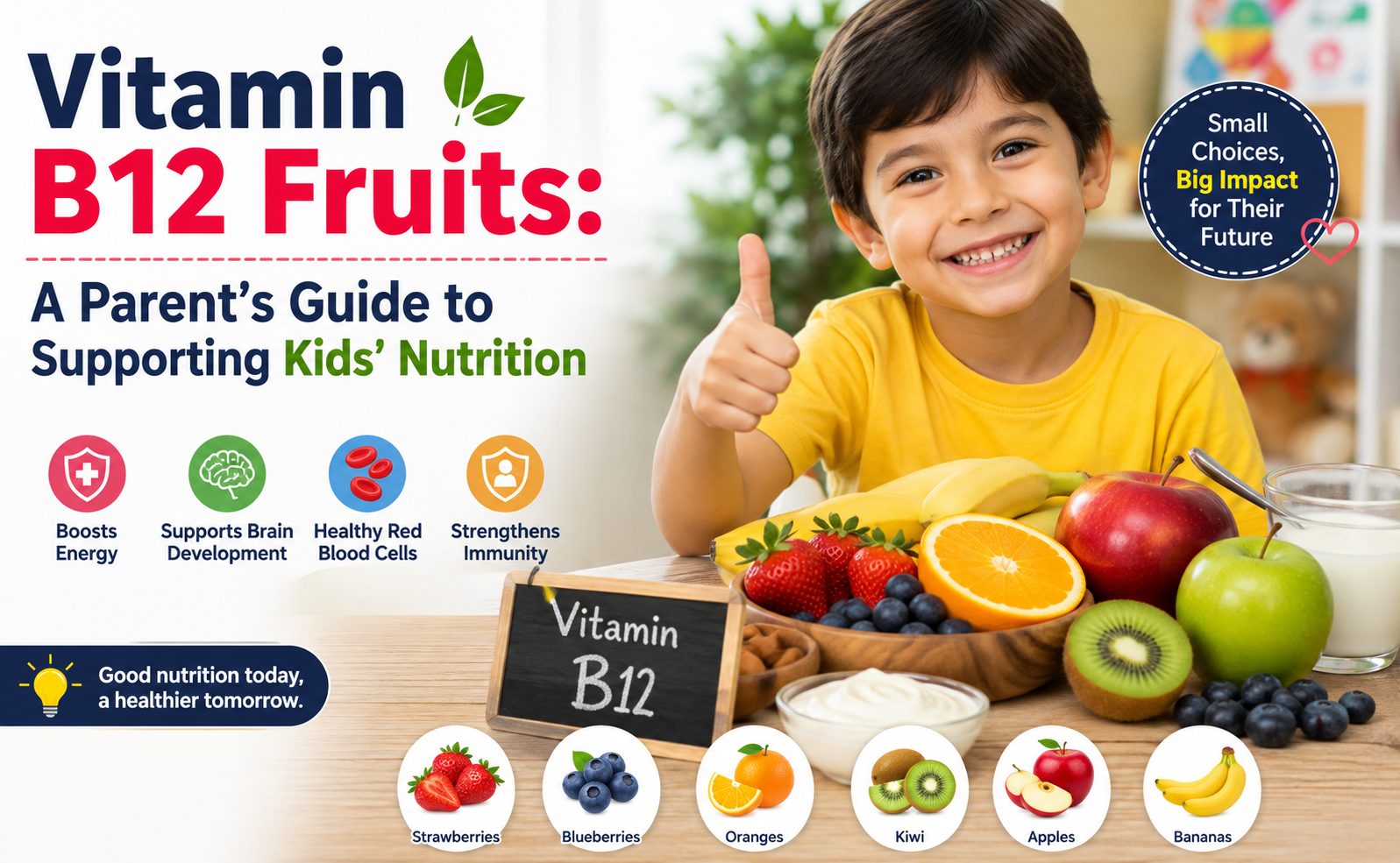


If you’ve searched for “Vitamin B12 fruits” hoping to find a simple, fruit-based way to boost your child’s B12 levels, there’s an important fact worth knowing before you plan meals around it: fruits do not naturally contain Vitamin B12. This isn’t a minor technicality — it’s a common and understandable misconception, but one that matters for your child’s health, because relying on fruit as a B12 source could leave an actual deficiency unaddressed.
This guide walks through where B12 actually comes from, why it matters so much for growing kids, which fruits can still play a supporting role in your child’s overall nutrition, and what practical steps parents can take to make sure their child is getting enough of this essential nutrient.
Why Vitamin B12 Doesn’t Come From Fruit
Vitamin B12 (cobalamin) is a water-soluble vitamin that’s produced by bacteria, not plants. In nature, it’s found almost exclusively in animal-derived foods — meat, poultry, fish, eggs, and dairy products — because animals accumulate B12 through their diet and gut bacteria. Fruits, vegetables, and most plant foods simply don’t contain meaningful amounts of it, regardless of how nutrient-dense they otherwise are.
This is different from many other vitamins. Vitamin C, for instance, is abundant in citrus fruits, and folate is plentiful in leafy greens and some fruits. But B12 follows a different biological pathway, and no amount of fruit consumption — however varied or colorful the diet — will meaningfully raise B12 levels on its own.
This is a particularly important distinction for parents raising children on vegetarian or vegan diets, where fruit and plant-based foods may make up a larger share of daily meals. Without a dedicated source of B12, whether from animal products, fortified foods, or supplements, a child on a primarily plant-based diet is at real risk of deficiency.
Why B12 Matters So Much for Kids
Vitamin B12 plays a central role in several processes that are especially critical during childhood:
- Neurological development. B12 is essential for the formation and maintenance of the myelin sheath, the protective coating around nerve fibers that allows for fast, efficient signal transmission in the brain and nervous system. This makes it particularly important during the early years, when brain development is happening rapidly.
- Red blood cell production. B12 is required for the healthy formation of red blood cells. A deficiency can lead to megaloblastic anemia, in which red blood cells are abnormally large and less effective at carrying oxygen.
- DNA synthesis and cell growth. As a nutrient involved in DNA production, B12 supports the rapid cell division that characterizes childhood growth.
- Energy metabolism. B12 helps convert food into usable energy, which supports the high activity levels typical of growing children.
Because of these roles, a B12 deficiency in children can show up as fatigue, irritability, poor appetite, pale skin, developmental delays, or difficulty concentrating. In more significant or prolonged deficiencies, the effects on neurological development can be harder to reverse, which is why early attention to adequate intake matters.
Where B12 Actually Comes From
For parents looking to support their child’s B12 intake, the most reliable sources fall into a few categories:
Animal-based foods are the richest natural sources. This includes:
- Meat (beef, poultry, and other lean meats)
- Fish and shellfish, particularly salmon, tuna, and clams
- Eggs
- Dairy products like milk, yogurt, and cheese
Fortified foods are especially useful for children who eat little or no animal product, or for picky eaters who may not consistently get enough through diet alone. These include:
- Fortified breakfast cereals
- Fortified plant-based milks (soy, oat, or almond milk with added B12)
- Fortified nutritional yeast, often used in vegetarian and vegan cooking
Supplements, available as chewable tablets, gummies, or liquid drops formulated for children, are often recommended by pediatricians for kids following vegan or strict vegetarian diets, or for any child whose intake is inconsistent.
If you suspect your child may not be getting enough B12 — particularly if they follow a restricted diet, have digestive conditions that affect absorption, or show symptoms like unusual fatigue or developmental concerns — it’s worth discussing bloodwork and a tailored plan with your pediatrician rather than guessing based on diet alone.
So What Role Do Fruits Actually Play?
While fruits won’t supply B12 directly, they’re far from irrelevant to your child’s overall nutrition — and they can support the systems that help the body use B12 effectively. A few ways fruit still earns its place on the plate:
Supporting absorption and gut health. B12 absorption depends on a healthy digestive system, including adequate stomach acid and a protein called intrinsic factor. Fiber-rich fruits support healthy digestion and a balanced gut microbiome, which indirectly supports nutrient absorption overall.
Providing complementary nutrients. Many fruits are rich in vitamin C, folate, and antioxidants — nutrients that work alongside B12 in processes like red blood cell formation and immune function. Folate in particular works closely with B12 in DNA synthesis, and fruits like oranges, strawberries, and bananas are useful folate sources.
Making fortified foods more appealing. Pairing fruit with a fortified cereal or a B12-fortified plant milk smoothie can make these foods more appealing to picky eaters, effectively using fruit as a delivery vehicle for foods that do contain B12.
Supporting overall energy and health. A diet rich in fruit contributes to a child’s general health, energy levels, and immune resilience, creating a stronger foundation on which other nutrients, including B12, can do their job effectively.
Practical Tips for Parents
- Build meals around a real B12 source first. Whether that’s eggs at breakfast, fortified cereal with milk, or a piece of fish at dinner, make sure at least one reliable B12 source appears in your child’s daily meals.
- Use fortified products strategically for picky eaters. If your child resists meat, fish, or eggs, fortified plant milks and cereals can help close the gap without a fight at the table.
- Pair fruit with B12-containing foods rather than substituting for them. A smoothie made with fortified milk and fresh fruit, or yogurt topped with berries, combines the benefits of both.
- Talk to a pediatrician about supplementation if your child follows a vegan or vegetarian diet. This is often the most reliable way to ensure adequate intake without relying on inconsistent food choices.
- Watch for signs of deficiency rather than guessing. Fatigue, pale skin, low appetite, or developmental concerns are worth discussing with a doctor, along with a simple blood test if needed.
The Bottom Line
Fruit plays an important role in a child’s diet — supporting digestion, providing complementary nutrients, and making healthy eating more appealing — but it is not a source of Vitamin B12. For that, parents need to look toward animal-based foods, fortified products, or supplements, particularly for children on vegetarian or vegan diets. Understanding this distinction isn’t about restricting fruit; it’s about making sure fruit’s real strengths are paired with the right nutritional foundation, so your child gets the full range of nutrients they need to grow, think, and thrive.
This article is for general educational purposes and isn’t a substitute for personalized medical advice. If you have concerns about your child’s nutrition or suspect a vitamin deficiency, consult your pediatrician.