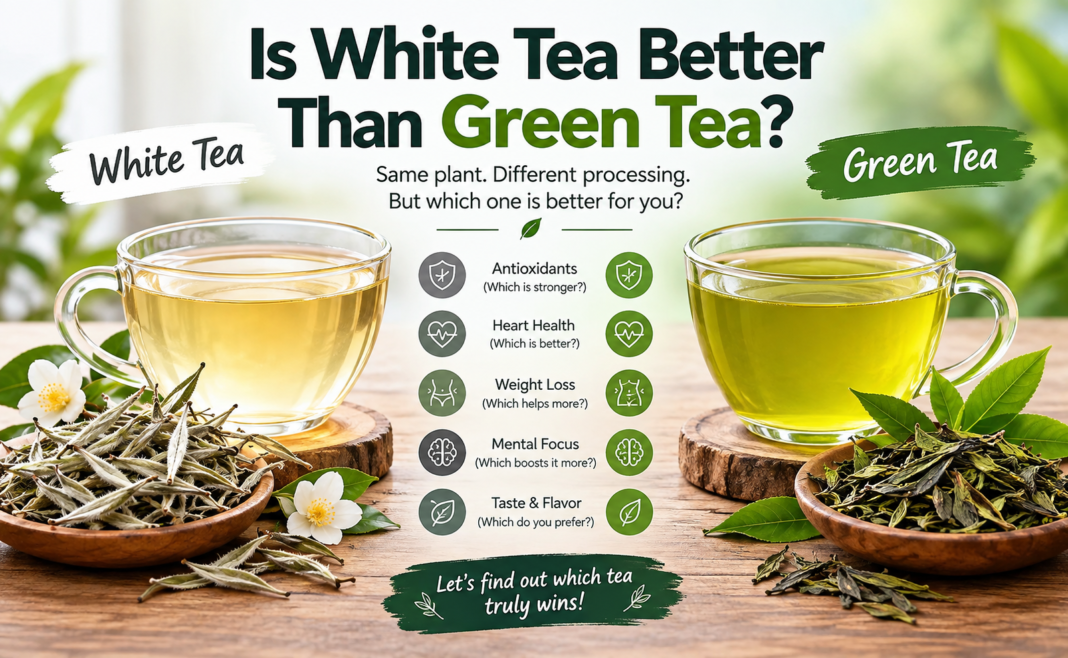


Tea is the most consumed beverage in the world after water, and among its many varieties, white tea and green tea consistently draw the most curiosity from health-conscious drinkers. Both come from the same plant, Camellia sinensis, yet they end up in your cup with different colors, flavors, and chemical profiles. The question of whether white tea is “better” than green tea is tempting, but the honest answer depends on what you mean by better—taste, caffeine, antioxidants, cost, or convenience. This article breaks down the science and the practical differences so you can decide which one deserves space in your pantry.
What Exactly Are White Tea and Green Tea?
The defining difference between white and green tea lies in processing, not in the plant itself. White tea is made from the young buds and unfurled leaves of the tea plant, which are harvested early in the season and then withered and dried with minimal intervention. Because there is little to no rolling, oxidation, or firing, white tea is often described as the least processed true tea.
Green tea, by contrast, is made from more mature leaves that are quickly heated—usually by pan-firing or steaming—to stop oxidation almost immediately after plucking. This step preserves the green color and the fresh, grassy character most people associate with the drink.
Both teas are distinct from black tea, which is fully oxidized, and from oolong, which is partially oxidized. So when you compare white and green tea, you are comparing two minimally oxidized teas that took slightly different roads to get to your cup.
The Antioxidant Question
Much of the “which tea is healthier” debate centers on antioxidants, particularly a group of polyphenols called catechins. The most famous is epigallocatechin gallate, or EGCG, which is heavily studied for its potential role in cell protection and metabolic health.
Green tea is generally recognized as the richer source of EGCG. Its processing preserves a high concentration of catechins because the leaves are heated soon after harvest, locking in the compounds. White tea also contains catechins, and some early studies suggested that certain white tea varieties might have comparable or even higher levels of specific antioxidants. However, the broader body of research tends to favor green tea for total catechin content, largely because it is more widely studied and its processing is more standardized.
It is worth noting that white tea’s buds are often covered in fine silvery hairs, which contain their own protective compounds. This contributes to white tea’s reputation as an antioxidant powerhouse, even if the evidence is not as deep as it is for green tea.
Caffeine Content
Caffeine is a practical concern for many drinkers. In general, white tea tends to contain slightly less caffeine than green tea, though the difference is often modest and depends heavily on the specific product, brewing time, and water temperature.
A typical cup of green tea contains roughly 20 to 45 milligrams of caffeine, while white tea often falls in the 15 to 30 milligram range. For comparison, an eight-ounce cup of coffee usually contains 80 to 100 milligrams. If you are sensitive to caffeine or enjoy tea in the evening, white tea may be the gentler option—but neither tea is caffeine-free, so those avoiding stimulants entirely should look to herbal infusions instead.
Brewing method matters as much as the leaf. A long steep in very hot water extracts more caffeine from either tea, so a strongly brewed white tea can easily surpass a lightly brewed green tea.
Flavor and Drinking Experience
Taste is where personal preference dominates, and it is often the deciding factor for daily drinkers.
White tea is typically described as delicate, smooth, and subtly sweet, with notes of honey, melon, or fresh hay. Because it is minimally processed, it can taste lighter and softer than green tea. High-quality white teas such as Silver Needle are prized for their refined, almost floral character.
Green tea offers a broader range of flavors. Japanese varieties like sencha and matcha are grassy, vegetal, and sometimes brisk, while Chinese green teas such as Dragon Well are nutty and toasty. Green tea can become bitter if brewed with water that is too hot or for too long, which is a common complaint among beginners.
If you dislike the grassy or bitter edge of green tea, white tea is often an easier introduction. If you love a bold, vegetal cup, green tea will likely satisfy you more.
Health Benefits: What the Research Suggests
Both teas are linked to a range of potential health benefits, and the overlap is substantial.
Green tea has been studied extensively for its possible roles in supporting heart health, weight management, and metabolic function. Its catechin content, especially EGCG, is the focus of much of this research. Some studies suggest green tea may modestly support fat oxidation and energy expenditure, though results are not dramatic and should not replace diet and exercise.
White tea shares many of the same compounds, so it is reasonable to expect similar benefits, even if the research is thinner. Some preliminary studies have explored white tea’s potential antimicrobial and anti-inflammatory properties. Because it undergoes less processing, some enthusiasts argue it retains more of the plant’s natural compounds—but “less processed” does not automatically mean “more effective.”
A fair summary is this: green tea has the stronger scientific backing simply because it has been studied more. White tea is likely beneficial in similar ways, but the evidence base is smaller. Neither tea is a medicine, and neither will offset an otherwise poor lifestyle.
Cost, Availability, and Practicality
White tea is often more expensive than green tea. The reason is partly agricultural: white tea is harvested from young buds during a narrow window in early spring, and the yield is lower. Premium white teas like Silver Needle are hand-picked and carefully processed, which raises the price further.
Green tea is generally more affordable and far more widely available in supermarkets, cafes, and tea shops. Matcha, a powdered green tea, has become a global phenomenon and is easy to find in everything from lattes to desserts.
If cost and convenience matter to you, green tea wins on both counts. If you are willing to spend a little more for a delicate, rare cup, white tea rewards the investment.
Brewing Tips for Each
Getting the best from either tea requires a little care.
For white tea, use water around 75 to 85 degrees Celsius (167 to 185 degrees Fahrenheit) and steep for two to five minutes. Because the leaves are delicate, cooler water helps preserve the sweet, smooth character.
For green tea, use water around 70 to 80 degrees Celsius (158 to 176 degrees Fahrenheit) and steep for one to three minutes. Boiling water will scorch the leaves and bring out bitterness. Matcha is different: it is whisked into hot water rather than steeped, and the whole leaf is consumed, which means you get more caffeine and antioxidants per serving.
In both cases, quality leaves and fresh water make a noticeable difference. Loose-leaf tea generally outperforms dusty tea bags, though convenient options have improved in recent years.
So, Is White Tea Better Than Green Tea?
There is no universal winner. The two teas are siblings, not rivals, and the better choice depends on your goals.
Choose white tea if you want a gentler caffeine hit, a smoother and more delicate flavor, or a tea that feels lighter and more refined. It is an excellent option for slow mornings and quiet afternoons.
Choose green tea if you want the most researched option, a wider range of flavors, stronger catechin content, and easier access at a lower price. It is the practical everyday choice for many tea drinkers.
You do not have to pick a side. Many tea lovers keep both on hand, reaching for green tea when they want a brisk, grassy lift and white tea when they want something soft and subtle. Rotating between them also keeps your palate interested and lets you enjoy the distinct character of each.
The Bottom Line
White tea and green tea come from the same plant and share many potential benefits. Green tea has more scientific support and more catechins; white tea is typically lower in caffeine and offers a smoother, more delicate taste. Neither is objectively “better” in every category. The best tea is the one you enjoy drinking consistently, because the real benefits come from making tea a regular, pleasant part of your routine rather than from chasing a single perfect leaf.