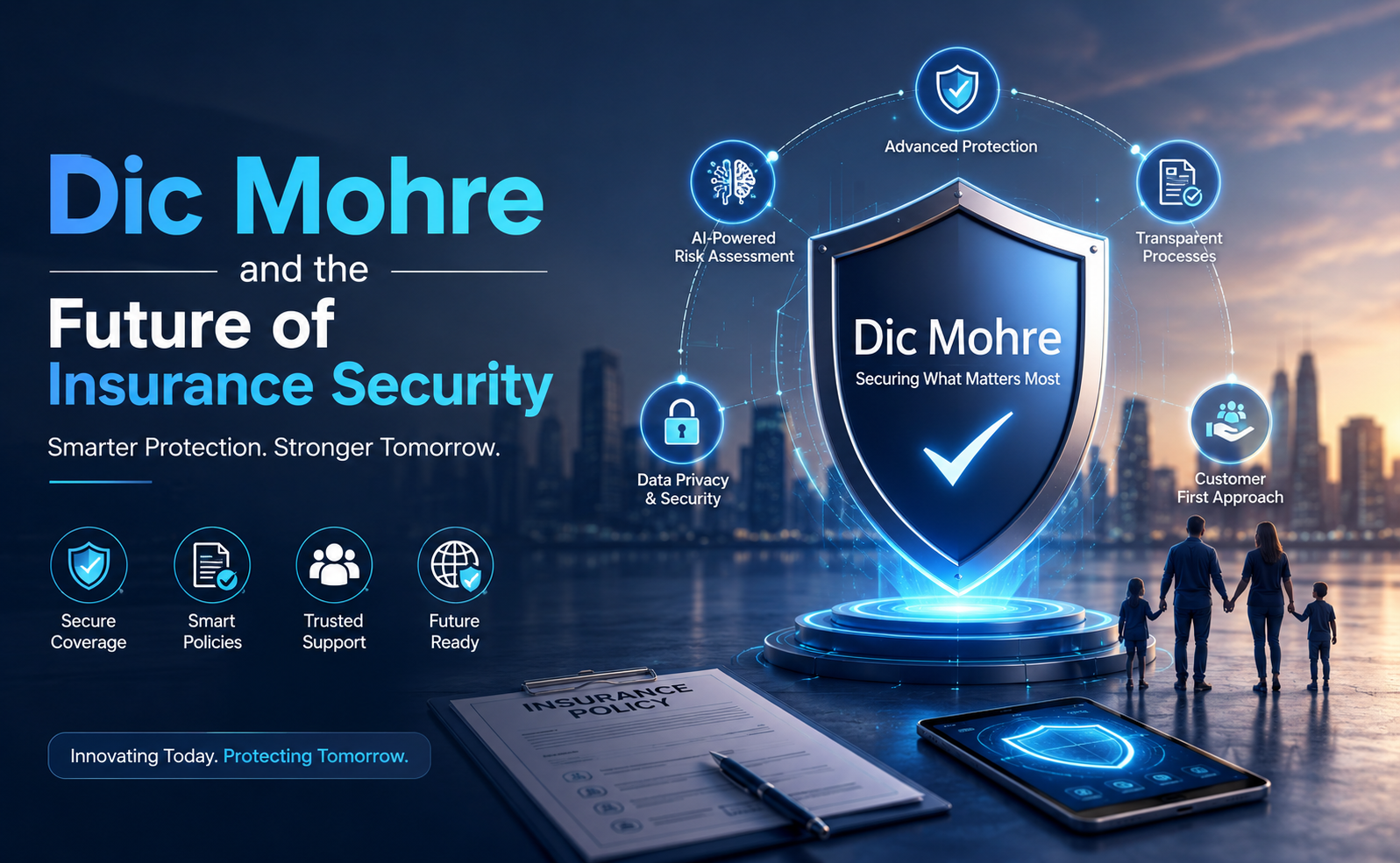


In the evolving landscape of the UAE’s labour market, Dic Mohre stands as a cornerstone of worker protection and financial stability. Managed by Dubai Insurance Company (DIC) under the Ministry of Human Resources and Emiratisation (MOHRE), Dic Mohre encompasses key schemes such as the Involuntary Loss of Employment (ILOE) insurance and the broader Workers Protection Program (WPP). These initiatives provide a structured safety net for employees facing job loss or unpaid entitlements, reflecting the UAE’s commitment to a balanced, competitive, and rights-based economy. As digital transformation, economic diversification, and global workforce mobility accelerate, Dic Mohre is positioned not only as a present-day solution but as a model shaping the future of insurance security in the region and beyond.
Understanding Dic Mohre: Core Components and Purpose
Dic Mohre refers primarily to the government-backed insurance frameworks administered through Dubai Insurance and an insurance pool of national companies. The flagship ILOE scheme, launched in line with Federal Decree-Law No. 13 of 2022 and operational from early 2023, offers temporary financial support to workers who lose their jobs involuntarily. It is mandatory for most private-sector and federal government employees, covering both Emiratis and expatriates, with limited exemptions such as investors in their own companies, certain domestic workers, temporary contract staff, those under 18, and pensioners in new roles.
Premiums are modest and tiered by basic salary. Workers earning AED 16,000 or less pay AED 5 per month (plus VAT), while those above that threshold pay AED 10. Compensation provides 60% of the average basic salary over the preceding six months, capped at AED 10,000 monthly for the lower category and AED 20,000 for the higher one, for up to three consecutive months per claim. Lifetime cumulative benefits are limited to 12 months. Eligibility requires at least 12 consecutive months of subscription, timely premium payments, and proof that termination was not due to resignation or disciplinary action. Claims must be filed within 30 days via the ILOE portal (iloe.ae), mobile app, or designated channels.
Complementing ILOE is the Workers Protection Program, which addresses unpaid wages, end-of-service benefits, and related dues when employers default. This insurance-based alternative to traditional bank guarantees reduces capital lock-up for companies while safeguarding employees. Together, these mechanisms form a dual layer of security: income replacement during unemployment and protection of earned entitlements.
Recent data underscores impact. Coverage has reached high levels among the targeted private-sector workforce (reported figures around 88–90% in successive updates), with tens of thousands of workers receiving payouts. Average settlements and total disbursements have grown steadily, demonstrating practical value in stabilising household finances and supporting labour market fluidity.
How Dic Mohre Strengthens Insurance Security Today
Traditional insurance often focuses on property, health, or life risks. Dic Mohre innovates by embedding social protection directly into the employment relationship. For employees, it reduces the immediate financial shock of job loss, allowing time to search for new opportunities without severe hardship or forced departure from the UAE. For employers, it offers compliance pathways that are often faster and more capital-efficient than bank guarantees, while building trust and reducing disputes.
The digital infrastructure is central. Subscriptions, renewals, premium payments, and claims processing occur through online portals, apps, service centres, banks, exchange houses, and kiosks. Real-time tracking and MOHRE integration minimise friction and enhance transparency. Penalties for non-subscription or prolonged non-payment (such as AED 400 for late enrolment and additional fines) reinforce compliance without creating undue barriers, given the low premium levels.
This model aligns with UAE Vision priorities: attracting and retaining talent, fostering a knowledge-based economy, and ensuring social stability amid economic shifts. By covering a large expatriate workforce alongside nationals, it supports the country’s role as a global hub.
Emerging Challenges and the Imperative for Evolution
No system is static. Challenges include ensuring accurate termination coding by employers (discrepancies between company letters and MOHRE records can delay or deny claims), maintaining continuous subscription during job transitions, and expanding awareness among all eligible workers. Free-zone variations and the distinct status of domestic workers require ongoing coordination. As remote work, gig arrangements, and short-term contracts grow, eligibility rules and product design may need refinement to avoid coverage gaps.
Broader insurance security faces pressures from climate risks, cyber threats, demographic changes, and economic volatility. Unemployment schemes must integrate with active labour-market policies—skills training, job-matching platforms, and reskilling—so that temporary support transitions into sustainable employment. Data privacy, fraud prevention, and seamless interoperability across government and private systems remain priorities.
The Future Trajectory of Dic Mohre and Insurance Security
Looking ahead, Dic Mohre is poised to evolve into a more sophisticated, predictive, and inclusive framework. Several trends will define this future.
Deeper digital and data integration. Artificial intelligence and advanced analytics can improve risk assessment, personalise communication, detect anomalies in claims or employer reporting earlier, and enable proactive outreach to at-risk workers. Integration with national digital identity systems, wage protection platforms, and labour market observatories will create a unified view of workforce health. Real-time dashboards already emerging in related MOHRE initiatives signal this direction.
Expansion and product innovation. Coverage may broaden to address emerging work forms or incorporate complementary benefits such as enhanced skills support or linkages to savings schemes. The existing Workers Health Insurance elements and end-of-service alternatives illustrate a modular approach that can scale. Premium structures and benefit parameters could become more dynamic, reflecting inflation, sector-specific risks, or economic cycles while preserving affordability.
Stronger public-private partnership. Dubai Insurance’s role as pool administrator, backed by highly rated national insurers, provides a replicable model. Future iterations may deepen collaboration with fintechs, banks, and education providers to offer seamless premium payment, financial literacy tools, and transition support. Cross-border portability or recognition of contributions could emerge as the UAE strengthens regional and global talent mobility.
Emphasis on prevention and resilience. The most advanced insurance security systems shift from pure indemnity to prevention. Dic Mohre’s future may include incentives for employers investing in workforce development, early-warning systems for sectoral disruptions, and integration with heat-stress, accommodation, and health standards already monitored by MOHRE. By reducing the incidence and severity of involuntary unemployment, the scheme multiplies its impact.
Regional and global influence. The UAE’s approach—mandatory yet low-cost coverage, digital delivery, dual focus on income and entitlements, and measurable outcomes—offers lessons for other Gulf and emerging economies. As countries refine social protection floors, Dic Mohre demonstrates how insurance mechanisms can complement rather than replace traditional labour regulation and end-of-service gratuity.
Building a Resilient Framework for Tomorrow
Dic Mohre already delivers tangible security: rapid compensation for eligible claimants, reduced capital burden for compliant employers, and measurable coverage gains. Its future success will depend on continuous refinement—clearer employer guidance on termination documentation, sustained public education, agile product adjustments, and investment in technology that anticipates rather than merely reacts to labour-market shifts.
Insurance security in the modern economy is no longer confined to individual policies. It is a systemic capability that underpins workforce confidence, business agility, and national competitiveness. By anchoring protection in accessible, mandatory, and digitally enabled schemes administered through trusted institutions like Dubai Insurance under MOHRE oversight, the UAE is constructing a model that balances individual dignity with economic dynamism.
As the labour market continues to transform, Dic Mohre’s evolution will serve as a critical test of how effectively societies can convert insurance principles into lasting human and economic resilience. Workers who face involuntary job loss will retain a bridge to the next opportunity; employers will operate within a clearer compliance environment; and the broader economy will benefit from greater stability and talent retention. In this sense, Dic Mohre is not merely an insurance product—it is infrastructure for the future of work.